NEWS | Fourth Set of Infected Blood Compensation Scheme Regulations Come into Force
The fourth set of amendments to the Infected Blood Compensation Scheme has now come into force, completing the Government's legislative response to the Infected Blood Inquiry's Additional Report and implementing changes following the public consultation. These amendments introduce a number of important improvements to the Scheme for both infected and affected people, while leaving some significant concerns unresolved.
Key changes include:
- New Hepatitis Level 2B severity band recognising the impact of treatment with interferon for people with chronic Hepatitis B and/or Hepatitis C, resulting in increased Care and Financial Loss Awards where applicable. This also applies to eligible deceased infected people.
- 50% Autonomy Award uplift for infected people who were infected before the age of 18, recognising the lifelong impact of childhood infection.
- New uplifts for affected children and siblings, with awards now reflecting the highest severity of the infected person's illness experienced during their childhood.
- 50% uplift for eligible bereaved parents whose child died before reaching adulthood.
- 50% uplift for eligible bereaved partners in recognition of the impact of losing an infected partner.
- Major expansion of the Unethical Research Award, widening eligibility beyond those who could previously demonstrate participation in specific research programmes.
- Treloar's School Award increased from £15,000 to £60,000, following feedback received during the Government consultation.
- Changes to Special Category Mechanism (SCM) awards to provide greater recognition for people with severe health conditions and their long-term impact on care and financial loss.
- Changes to the calculation of Financial Loss and Care Awards in a number of circumstances, together with technical amendments to improve the operation of the Scheme.
Issues that remain
While these regulations introduce a number of positive changes, some important issues raised during the consultation were not addressed. These include the continuing 25% deduction applied to deceased infected estates where the Support Award option is unavailable, as well as ongoing concerns regarding compensation for carers, deceased estates and other areas where families continue to seek further reform.
The Fourth Set of Regulations represents the most significant update to the Compensation Scheme since its introduction and will affect both current and future compensation claims assessed by the Infected Blood Compensation Authority (IBCA).
______________________________________________________________________
Deadline for Interim Estate Payments Announced
The Infected Blood Interim Estates Payment Scheme (IBIEPS) will close to new applications on 30 October 2026.
If you are applying by post, your application must arrive with an Infected Blood Support Scheme (IBSS) by 30 October.
If you are still waiting for probate, confirmation or letters of administration, it is important to get this underway as soon as possible. These documents are required not only for the interim estate payment, but also when making a deceased infected compensation claim through IBCA.
Please share this with anyone who may still need to apply.
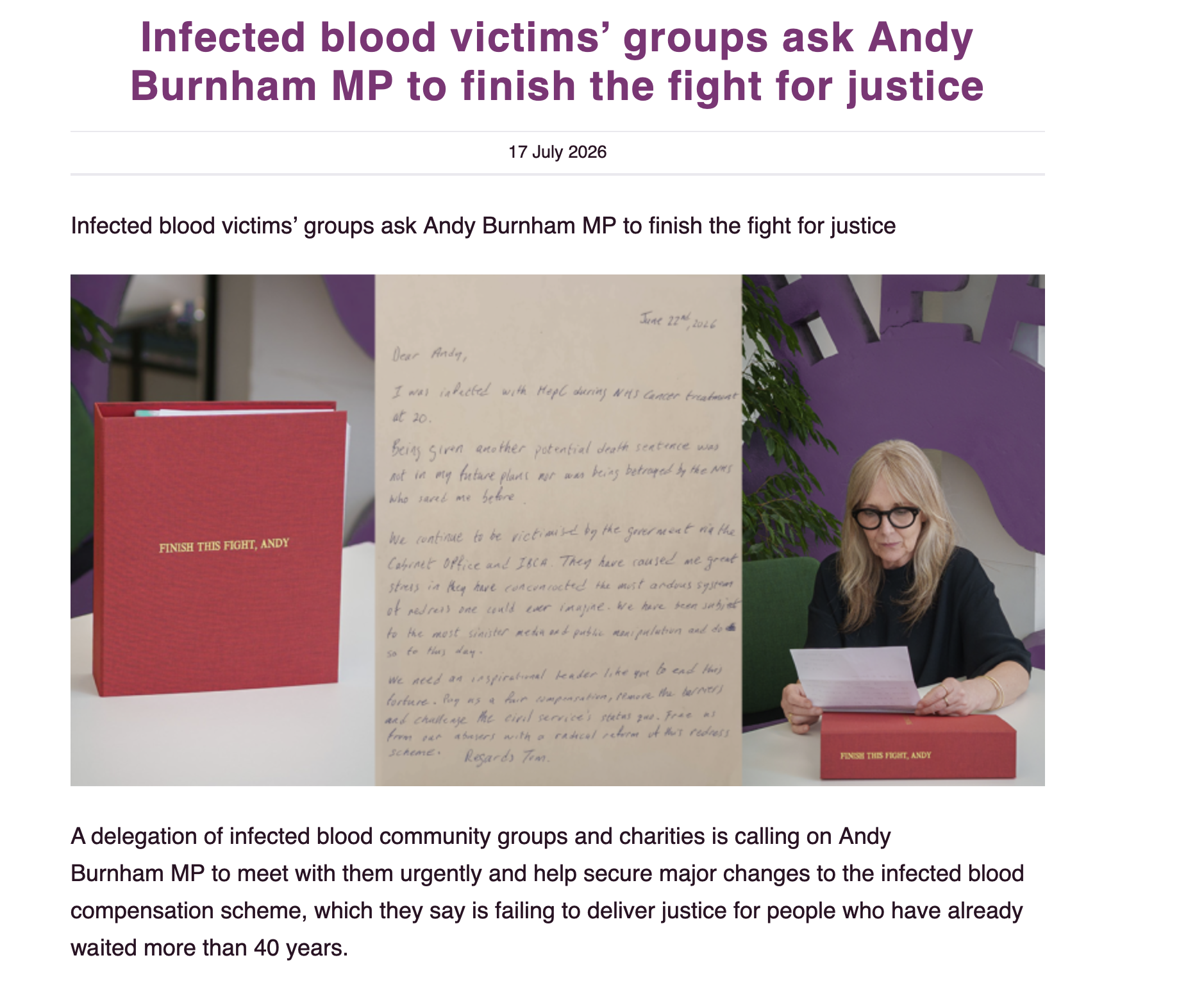

NEWS | House of Lords Debate Highlights Ongoing Concerns Over Compensation Scheme
On 22 July 2026, members of the House of Lords debated the Infected Blood Compensation Scheme (Amendment) Regulations 2026 before approving the fourth set of regulations. Although peers welcomed the improvements introduced by the new legislation, many also made clear that important issues remain unresolved.
Issues raised during the debate included:
- The pace of compensation, with concern that thousands of eligible people are still waiting for payments despite progress made by the Infected Blood Compensation Authority (IBCA).
- Deceased estates, with peers expressing concern about how compensation is delivered where the infected person has died and the practical difficulties families continue to face.
- Affected people, with calls to ensure that family members and carers receive fair and timely compensation alongside infected people.
- Care Awards, including concerns that the current arrangements do not always recognise those who actually provided care, particularly in deceased cases.
- Operational challenges for IBCA, with questions over whether the Authority has sufficient resources and processes in place to deliver compensation without further delay.
- Future legislative changes, with recognition that further amendments may still be needed as issues emerge during implementation of the Scheme.
During the debate, Baroness Brinton tabled a Regret Motion acknowledging the improvements made by the regulations while expressing concern that they did not address all of the issues identified by victims and representative organisations. Although the motion was not carried, it provided peers with an opportunity to place a wide range of concerns on the parliamentary record.
The regulations were subsequently approved by the House of Lords and have now come into force.